UX CASE STUDY — 2026
Hum
A private reflection tool designed for the moment before someone feels ready or “serious enough” to ask for support.
Capture a thought. Recognize recurring Threads. Reflect through weekly Letters without entering an AI conversation.
AI quietly organizes recurring themes, surfaces possible connections, and creates reflections grounded in the user’s own thoughts. The user decides what those observations mean and what comes next.
ROLE
Solo Product & UX Designer
TIMELINE
June 2026 - August 2026
SCOPE
UX/UI, Research, Prototyping
STATUS
Prototype complete; Evaluative usability testing planned


Scroll to read the full case study!
ORIGIN + PROBLEM
What exists before someone feels ready to ask for help?
Hum began with a personal contradiction. During a difficult period, I found it easier to process my thoughts privately with an AI tool than explain what I was feeling to people close to me or seek formal support.
Support was available, but opening up felt vulnerable and I kept questioning whether what I was experiencing was “serious enough” to justify it.
I wasn't avoiding support because nothing was wrong. I was avoiding the decision that something was wrong enough.
That experience shaped my research question, not my solution. I wanted to understand whether other people also minimized their feelings before taking any meaningful first step.
Most existing tools begin after that decision: therapy platforms assume someone is ready to seek help, wellness apps ask them to start a routine, and AI companions expect a conversation. Hum explores the quieter gap before any of those choices.
The opportunity was not to make the decision for users, but to help them understand what they were carrying before deciding what (if anything) should come next.

EARLY RESEARCH + SYNTHESIS
The largest barrier was often self-minimization, not access.
I conducted an exploratory survey with 44 participants to understand how people respond when something affects them emotionally, what prevents them from reaching out, and what could make an early reflection tool feel approachable. Response totals varied because some questions were optional.
58%
said they had avoided support because the problem did not feel serious enough.
44 total survey participants · 33 responses to this question · 19 selected this response

Private
Personal thoughts should not feel exposed or socially demanding.
Low Pressure
No streaks, rigid programs, or expectation to immediately take action.
Sense-making
Personal thoughts should not feel exposed or socially demanding.
User-Directed
Offer guidance while leaving interpretation and next steps to the user.
Affinity Mapping
I grouped survey responses into recurring coping behaviors, barriers to reaching out, and expectations for an approachable reflection tool. The strongest patterns centered on handling things alone, distracting oneself, minimizing the issue, and avoiding experiences that required ongoing commitment.


Two lives, one shared hesitation


OPPORTUNITY + DESIGN CHALLENGE
Guidance without pressure, conversation, or a predetermined outcome.
A competitive audit across meditation, therapy, journaling, gamified wellness, and AI support showed that most tools ask for commitment before creating value: begin a routine, enter a program, journal consistently, or maintain a conversation.
Hum's opportunity was to begin with almost no commitment, then become more meaningful as brief thoughts accumulated.
How might we guide people toward a clearer understanding of what is occupying their minds without requiring them to label their experience, enter a conversation, or feel ready to seek help?
Guide without prescribing
Offer observations and prompts, not conclusions.
Surface patterns, not diagnoses
Offer observations and prompts, not conclusions.
Keep AI in the background
The user's thoughts remain the main experience.
CONCEPT DEVELOPMENT
From a familiar forest to a tangible keepsake box.
Early concepts used a forest to represent gradual exploration. Although calming, it felt familiar within wellness products and did not clearly explain Hum's core interaction.
I shifted toward a keepsake box: a private place where thoughts could be set down, stored, and revisited when the user felt ready. The metaphor also made AI feel less like another person responding and more like a quiet layer organizing what the user had already shared.

Crazy 8 Sketch

First Box Concept
THE REFLECTION SYSTEM
Externalize. Understand. Reflect.
Hum separates immediate expression from later interpretation. No instant AI reply demands another response; guidance builds gradually, and the direction stays with the user.
Thought Box
externalize
Set a thought down, by text or voice, without needing to explain, solve, or justify it.
Threads
understand
See what keeps returning, how often it shows up, and what else it tends to appear alongside.
Letters
reflect
Periodic, slower reflections grounded in recent thoughts, closing with an open question instead of a conclusion.

Thought Box

Threads

Letters
LOW-FIDELITY WIREFRAMES
Giving the reflection loop a clear structure.
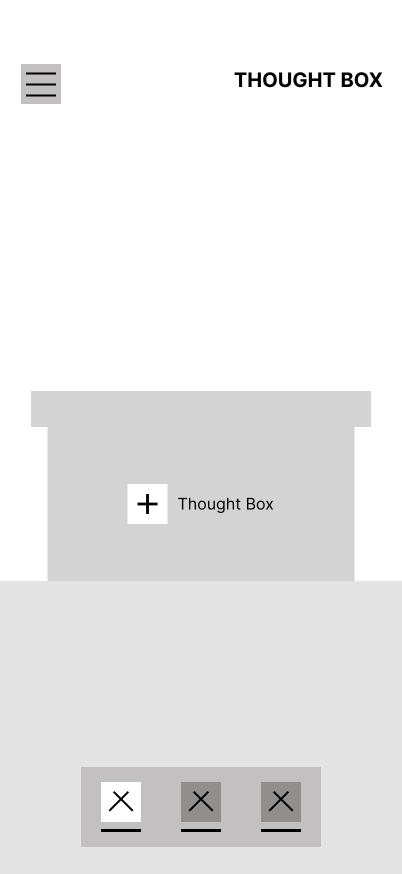
Paper wireframes helped me separate the immediate act of setting down a thought from the slower process of understanding it. I then translated the strongest ideas into grayscale digital screens before refining the visual system.
A dedicated composer kept thought capture focused
Persistent navigation connected the three reflection spaces
A relationship map showed overlap better than a theme list
Separate developing, current, and previous Letter states clarified time

Paper Lo-Fi Wireframes


KEY DESIGN DECISIONS
Three changes that made Hum clearer and more trustworthy.
DECISION 1
Making thought capture discoverable
Early concepts relied on the box illustration as the interaction. I introduced explicit actions for sharing and revisiting thoughts while preserving the calm home screen.
BEFORE
Box-centered screen with limited action clarity.
AFTER
Clear “Share a thought” and “See previous thoughts” actions.
DECISION 2
Turning “Nodes” into “Threads”
“Nodes” described the system technically, not emotionally. “Threads” better captured subjects that repeatedly weave through someone's life and connect to each other.
Circle size communicates how frequently a subject appears
Connections show subjects that tend to surface together
“What Hum noticed” is framed as a possible observation, not a diagnosis
DECISION 3
Making Letters feel grounded
Early Letters risked sounding like generalized motivational writing. I made their basis more visible by adding “Threads reflected,” referencing concrete subjects from past thoughts, and using cautious language such as “may” and “appeared.”
Each Letter ends with an optional question that returns interpretation to the user rather than supplying an answer.
VISUAL SYSTEM + ACCESSIBILITY
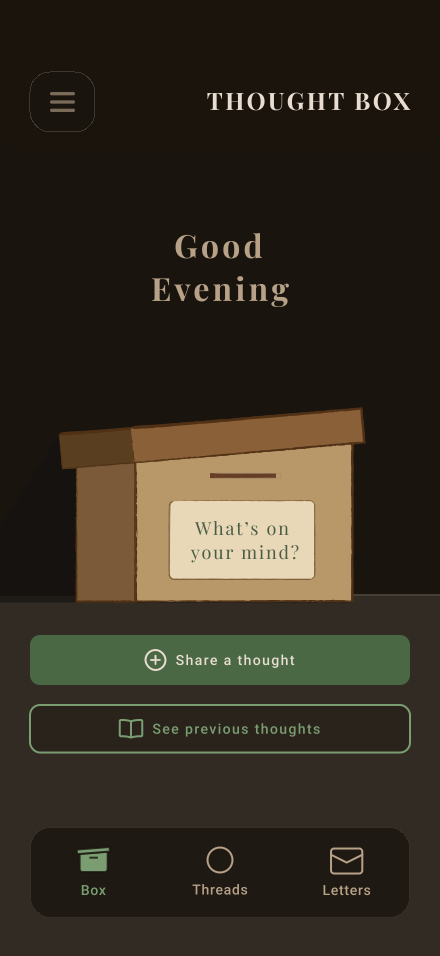
A calm palette designed for private reflection.
Warm paper tones, muted greens, and craft accents make Hum feel personal and grounded rather than clinical or overly technological. Deep forest and ink colors provide visual structure, while the restrained palette keeps attention on the user's own thoughts.

Accessible ways to reflect.
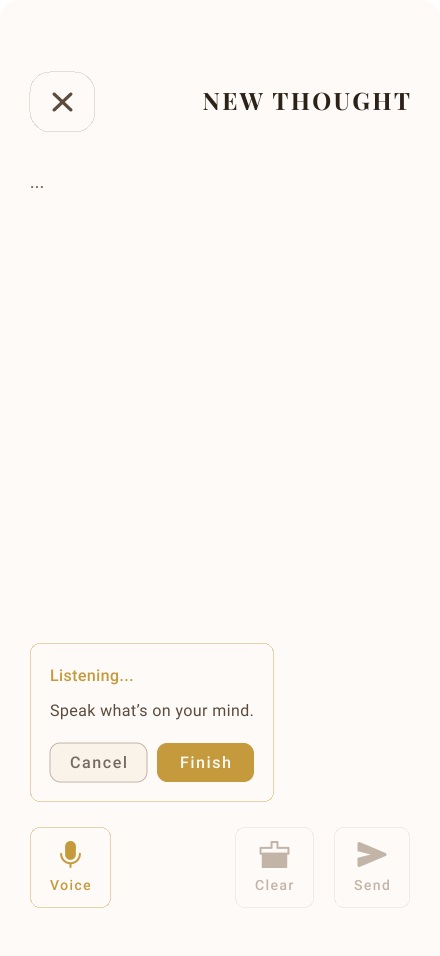
Hum gives users more than one way to make the experience comfortable and approachable.
Complete light and dark modes — Users can choose the appearance that feels more comfortable during daytime or late-night reflection.
Text or voice thought capture — Voice input in the Thought Box offers an alternative when typing feels difficult or interrupts the moment—without starting an AI conversation.
TRUST + RESPONSIBLE AI
AI supports the reflection. It does not own the interpretation.
Paper, cardboard, envelopes, muted greens, and warm neutrals make Hum feel personal rather than clinical or futuristic. Behind that visual warmth, its use of AI still needs to remain transparent, limited, and open to correction.
What Hum does
Organizes shared thoughts into recurring Threads
Surfaces possible connections across the user’s entries
Creates periodic Letters grounded in previous thoughts
Offers optional questions that support self-reflection
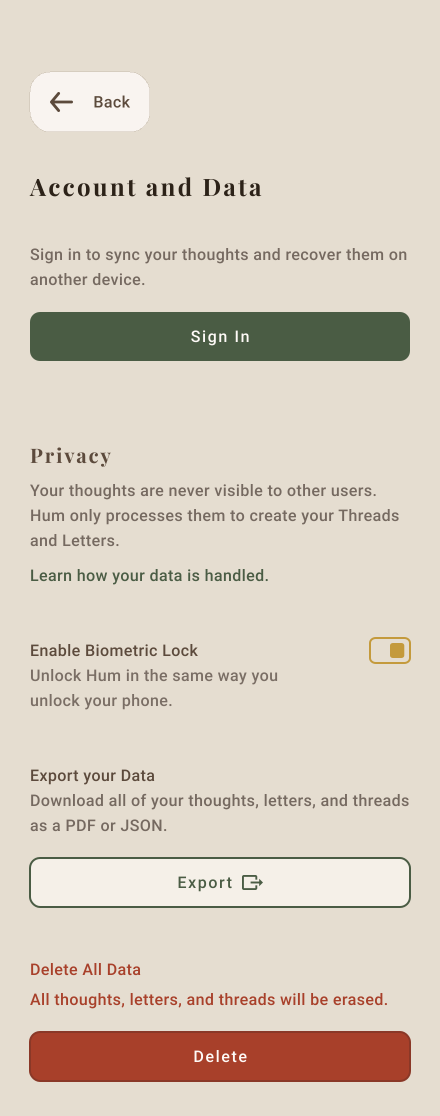
Gives users control over their thoughts and account data
Clearly explains when and how AI is involved
What Hum does not do
Diagnose or present interpretations as facts
Tell users how they should feel
Replace therapy, trusted relationships, or crisis support
Require a conversation or gamify disclosure

FINAL EXPERIENCE
Guidance without the chatbot.
Hum uses AI to organize recurring themes, surface possible connections, and compose periodic reflections. But the user's thoughts (not an AI personality) remain at the center.
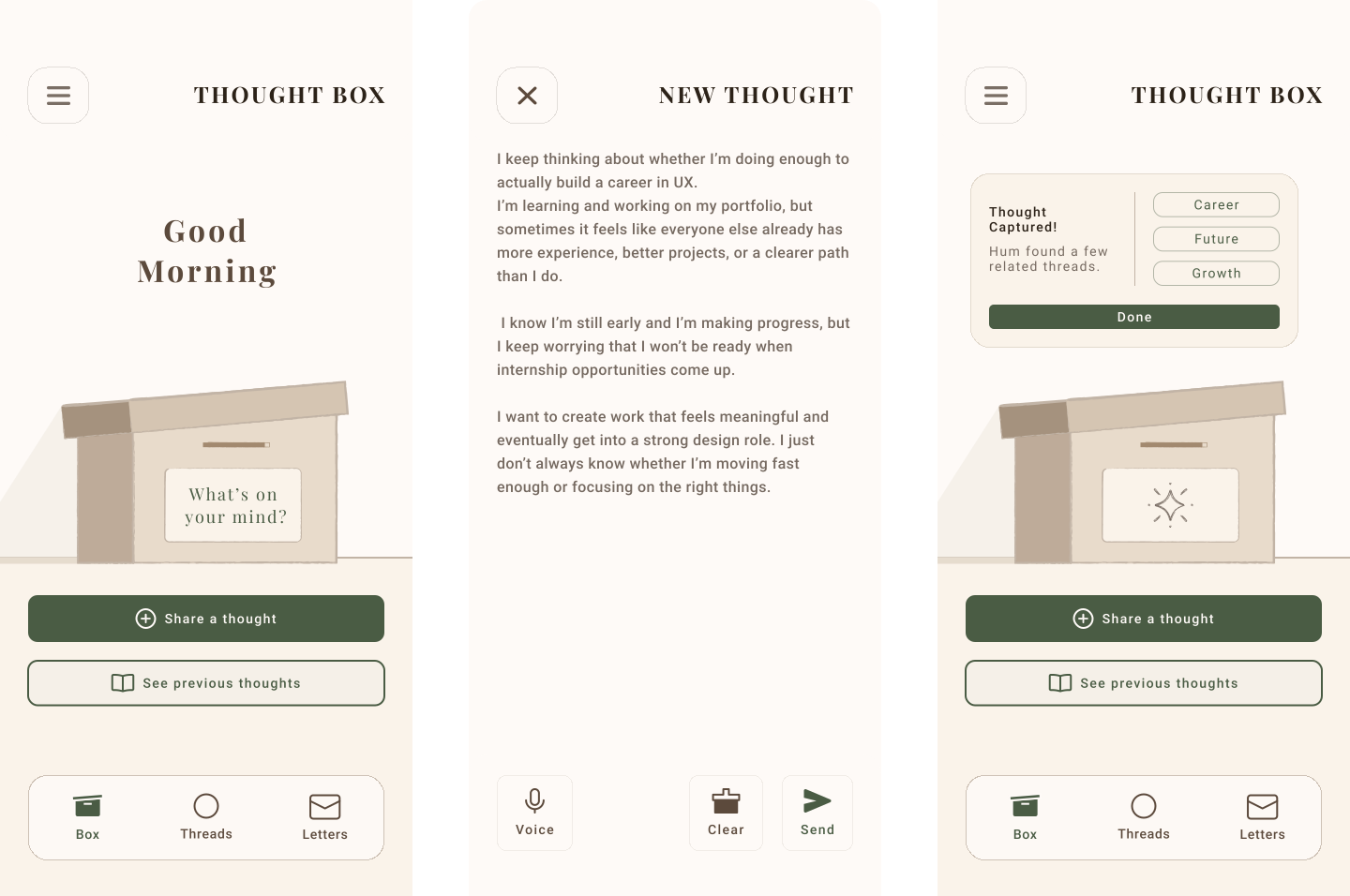


Hum is not here to tell users what to think. It helps them see what they have already been thinking about
CURRENT OUTCOME + NEXT STEPS
An end-to-end concept ready for evaluation.
High-fidelity mobile prototype with text and voice thought capture
Interactive Threads, deeper observations, and relationship mapping
Developing, available, and previous Letter states
Complete light and dark modes with privacy and data controls
Testing whether quiet guidance feels useful, not empty or controlling.
Evaluative usability testing is the next phase. I plan to test whether users understand the three-part system, trust what Letters are based on, correctly interpret Thread sizes and connections, and feel that Hum supports rather than replaces their judgment.
Study planned · Findings and resulting iterations will be added after testing.
WHAT I LEARNED
Guidance doesn't have to mean giving answers.
Designing Hum taught me that supporting users requires knowing when technology should provide structure and when it should step back. Removing the chatbot format was only the beginning. I also had to make Hum’s observations feel grounded, communicate the limits of AI, and return interpretation to the user.
Hum became more purposeful when I stopped treating an immediate AI response as the default reward for sharing a thought. Instead, Threads and Letters provide slower guidance intended to strengthen the user’s understanding—not replace it.
Designing a full-fledged app has made me think deeper about specific user experiences as well, such as making it accessible to a wider audience and to take in user's privacy and data in consideration as well. These experiences really helped me shape into being a more holistic and thoughtful UX designer behind every interaction or component.
The goal is not to create dependence on Hum. It is to help users build enough clarity to decide what they need beyond it.
VIEW OTHER WORKS
© 2026 Pranav Diddi